Author: jeremy

  • Hayakawa Hamonoten 早川刃物店 knife sharpeners in Kyoto

    Hayakawa Hamonoten 早川刃物店 knife sharpeners in Kyoto


    In 2019 I visited Kyoto with a goal to purchase a better さばき包丁 (sabaki knife) for fish and some veggie use. I’ve been to a few houchou artisans in Kyoto and wanted to try somewhere different. After visiting several and being mostly ignored, one guy had a friendly customer approach and we got chatting.

    Their business has been running for around 120 years and has passed through 4 generations. Hayakawa Hamonoten are not knife and scissor manufacturers, but sharpeners. If you purchase your knife your customer experience starts with questioning. Yes, a detailed understanding of customer needs. So many businesses forget how to do this to the point that the customer wants to advocate.

    “What will you use your knife for? How often, what kind of a lifetime do you want, where will you use it, is it a multipurpose and how much effort will you put into maintenance?” These are just some of the questions I was asked as I was guided along the conversation and arrived at the end feeling like I was purchasing a Maserati.

    It was raining and I had in mind a quick purchase and a plan to zip off to a cafe around the corner I’d spied that had a fireplace. But the owner’s passion for the craft, made the hour stay a privileged learning experience. Knife materials, widths and the purpose of blade angles were some of my lessons. Explanations to questions were patient, happy and humbled in the way only decades of experience can provide.

    Hamonoten, like many life sharpeners in Kyoto, engrave your name into the blade along with the founders name – Nobuhisa. Personalisation. There is something very special about old school physical personalisation of a product you purchase.

    It was the end of the day and near their closing time so I casually mentioned I was leaving Kyoto and wouldn’t be back soon, expecting the result would be a postage option the next day. But customer service – “head off to the cafe, take my umbrella and I’ll finish it for you”. One hour past closing time, I received my knife. He’d stayed back working on the grinder just for me.

    Customer experience. 

    • Gather a true understanding of the customer’s needs.
    • Deliver an amazing product and service through passion.
    • Work every angle, so every single customer walks out happy and an advocate.

    I took my new knife on every fishing trip. Rave about it, recommend the place of purchase and tell the story. 

    Unfortunately in 2024 my car was broken into and this knife was stolen. I’ll return to Hamonoten soon to purchase again. I’m a lifetime customer. 

    Hamonoten is 5 star rated – read the reviews and you can see the long term advocacy and volume of repeat business they have gathered over time. Trip Avisor – 5 star rating Facebook – 5 star rating

  • Kotouen (小陶苑) a beautiful pottery gallery and tea ceremony classroom Arashiyama, Japan

    Kotouen (小陶苑) a beautiful pottery gallery and tea ceremony classroom Arashiyama, Japan


    Kotouen (小陶苑)
     is a beautiful pottery gallery and tea ceremony classroom in the heart of Arashiyama, Japan. I visited the couple who’ve run it for over 50 years, a business passed down from the owner’s father. The atmosphere was still and I didn’t want to leave. Sitting in the garden with beautiful hand-built pottery everywhere, I ended up chatting, drinking ocha mixed by the master and discussing the reasons why their business had continued for so long.

    With a nondescript entrance and a small sign, it didn’t appear to attract big numbers of customers the day I visited. Just a trickle of the right kind. The entrance opens up to a small garden with low table seating under the dappled maples. A slight breeze and dancing sunlight highlight the large ceramic pieces spotted around the garden. A hotel, small animals and interesting creatures, it was like sitting in a children’s storybook.

    The owner was kind enough to share his studio story and how he teaches ceramic classes while his partner teaches tea making (sado) lessons.

    For the lifespan of the business they’ve cultivated a loyal base of customers that advocate for them, and they’re service is extraordinary. In the two hours I spent there, I learnt of the business history, about their connections in Perth!, how the business has passed through the family generations and many of the stories behind some of the amazing hand-built pottery pieces. The centrepiece in the workshop is a small boy riding a large fish, made for the birth of their son.

    One of the reasons they explained for their continued success, is they value every customer and every moment they had to interact with them. This was a learning moment for me. Our time with each other is so precious.

    At Koutouen they put a very high value on each and every interaction they have with not just current customers – but also any new people who wander through and don’t purchase.

    Kotouen’s garden environment lends itself to a pace slow down and an interesting conversation.

    We can relate these lessons to the workplace too. In a fear-based work environment, we’re in survival mode. Each and every interaction with work colleagues or clients is an opportunity to learn something and it may be something small, but may last a lifetime.

    In Japan there’s a saying used often in business, sa-bisu gokoro (サービス心) – service mind. It’s the real desire to understand what a customer desires and leave them satisfied, happy and wanting to advocate as they walk out the door or finish using your service. It requires a focused effort on the customer, their needs and how we can meet, exceed and ultimately delight them. At Kotouen, their personal service comes from a real desire to make each person happy with their purchase and experience.

    It’s up to us all to make a safe workplace and culture where we all have the capacity to focus and genuinely want to provide an amazing service or product.

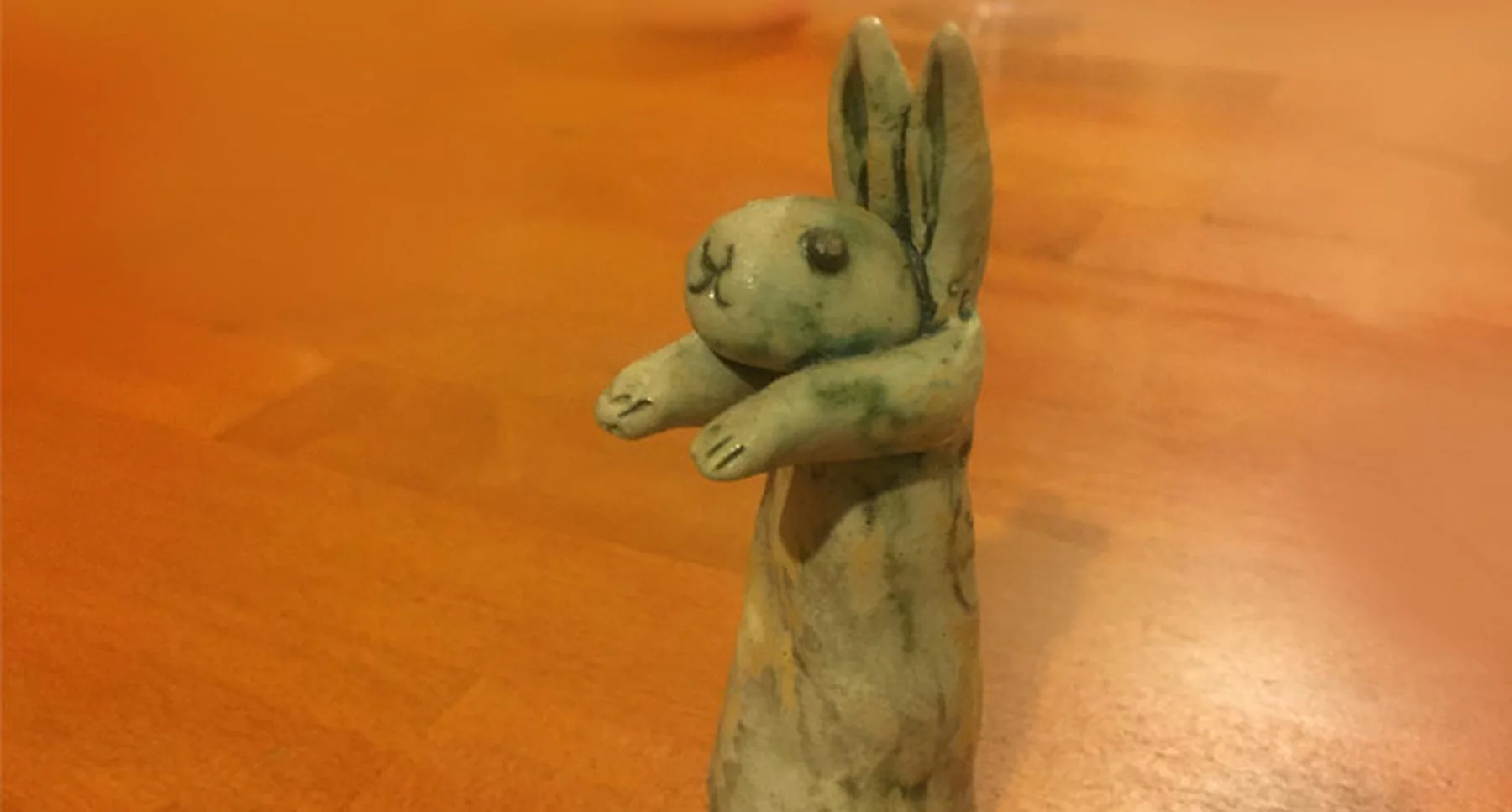
    The rabbit, well that was a final present from Kotouen as I left and serves as my reminder of this lesson at home each day.

  • How I grow Japanese mitsuba herb all year round

    How I grow Japanese mitsuba herb all year round

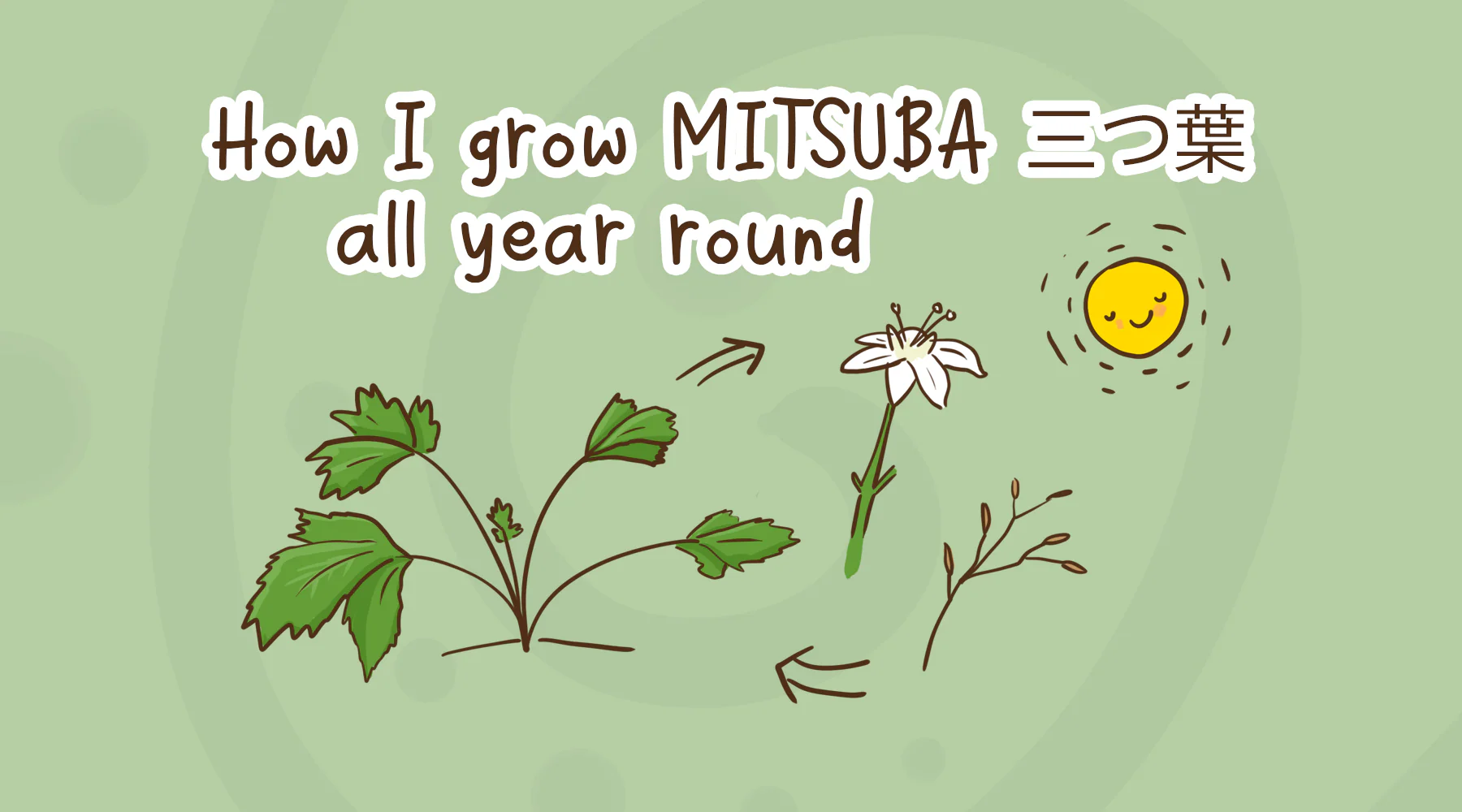
    Mitsuba (三つ葉) is known by a few names and the most common would be Japanese parsley. It’s quite similar to parsley in size and appearance. Other names are wild parsley or Japanese hornwort. 

    The name

    三みつ葉 は or Mitsu-ba literally means three objects + leaves (three leaves) or compound leaves with three leaflets. It is often spelt using Katakana in nurseries in Japan. The genus is Cryptotaenia and the species is Japonica. It’s a perennial and part of the celery family. I’ve had some plants live a couple years, but they do generally all dry up here in Australia due to the heat. But with a little care, you can keep it alive. Of course as they get older, their bitterness increases.

    Read the full article on how to grow Japanese Mitsuba herb here.

    Join me on Threads for more or subscribe at the bottom of the page for these posts in your email.

  • An easy method to grow a store bought mango seed

    An easy method to grow a store bought mango seed

    This article explains how to grow a mango tree from a store bought mango fruit by germinating the seed.

    If you’re a mango fan, then you dream of having a huge mango tree that always has massive sweet fruit. You might be lucky enough to live on property or in an area that has trees you can access. Lucky you!

    Varieties of mango

    In Australia we grow varieties like Kensington Pride, Calypso, R2E2, Honey Gold, and Palmer. I prefer the Honey Gold because of their texture and sweetness. Although I haven’t had a chance to try them yet, I really want to try the Nam Doc Mai. 

    Eat your mango

    Don’t forget to peel it first!I slice both sides and then eat what’s left on the seed. After that I give it a wash and let it dry off for a day or two. It’s easier to handle that way.

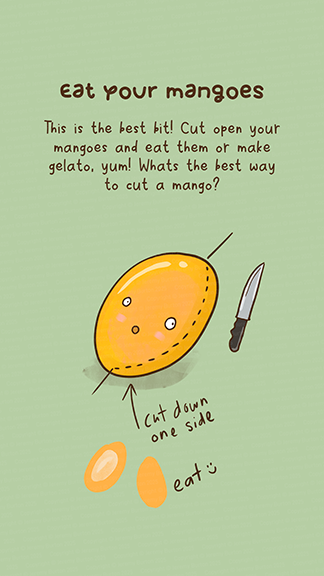
    Eat your mangoes

    It’s time to eat! The best part! What’s the best way to cut a mango? 

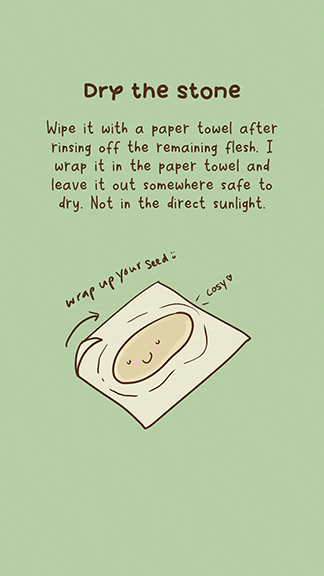
    Dry the stone / kernel

    Wash it off and then wrap it in a paper towel. Leave it out for a few days, not in the sun. It should be pretty dried by then. I sometimes put it on an ants nest, they clean it up really well. 

    Slice open the seed

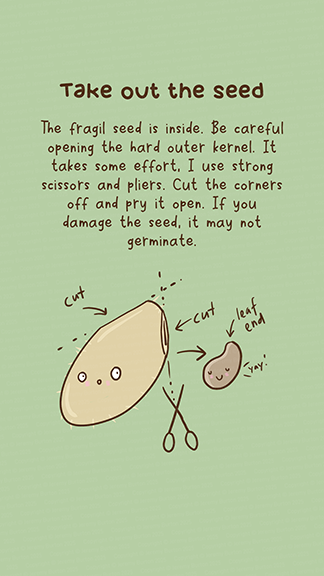
    Grab a flat screwdriver, pocket knife and some scissors. Unwrap the kernel from the paper towel and cut the corners off carefully so that you can see inside the casing. I usually cut one or two corners off. 

    Then grab your screwdriver and gently pry the case open. It takes a bit of force. Be careful not to damage the soft seed inside. If you do damage it, it may not germinate. The seed is several parts held together in a fragile way. If they break apart, you’ll need a new seed.

    When you get the kernel case open, carefully cut through the remainder of the connector between the seed and the case. Now you have your seed! You can leave all of the papery casing (the pit) on it, that’s fine. 

    Plant your seed

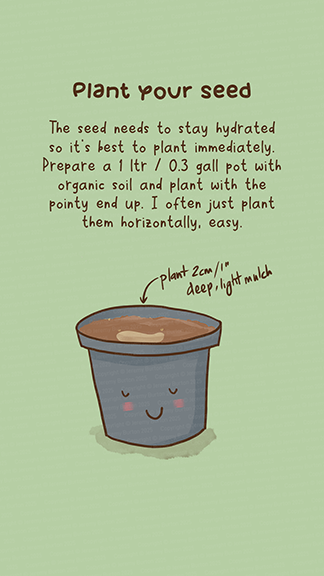
    Plant it into a pot, it doesn’t have to be big to start off. A small 0.5L or 17oz pot is enough to get it started. Which direction do you plant the seed? The leaves will sprout from the pointy end of the seed. I usually just lay it on its back, easy. 

    New mango plant

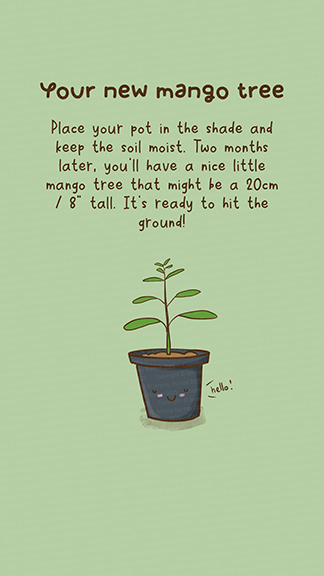
    It will germinate and grow in a 1-2 months. The first leaves come our dark red, then pink  and then light to dark green. They’re soft and fragile, I keep mine under shade to prevent sunburn in summer. Usually by the end of summer they’ll be 1-2 foot high and ready for a bigger pot. 

    Mangoes are not too fussy about the soil, it just needs to be well draining. They are a deep rooting tree (can be 5-6m) so once it gets to a meter or a few feet in your bigger pot, then it’s time to plant it into the ground. 

    You can germinate the seeds in water and a paper towel. Honestly it’s gonna end up in the soil anyway, just put it in the soil! It is fun to watch though if you want to share the process with the kids, so yeah half submerged in a water container near a kitchen window. Watch it sprout 🙂

    After it hits 20cm or 8″ or so it’s ready for the ground, you can play it safe and wait till it’s a meter / 3′.

    Sunshine and climate

    Mangoes love the sunshine and a warm climate. If you’re in a subtropical or tropical climate zone, your mangoes will love you. They can grow in cooler climates and also inside, but they may not fruit. Ideal temperature ranges are 70–85°F (21–29°C). 

    In Broome in the north of Australia, there are often cyclones and these can damage the tree branches, knock the fruit off and damage the flowers. I’ve wandered around Broome picking up mangoes off the ground after strong winds. 

    Pruning

    In the first 2-3 years, run it back 30% in height and also the horizontal branches. Mangoes need a good pruning. 

    Mulch your tree

    In Australia we mulch them in Spring and this encourages branching and fruiting. I mulch out to half the width of the tree. You can fertilise with something like you’d use for a berry. 

    Wait 3-8 years

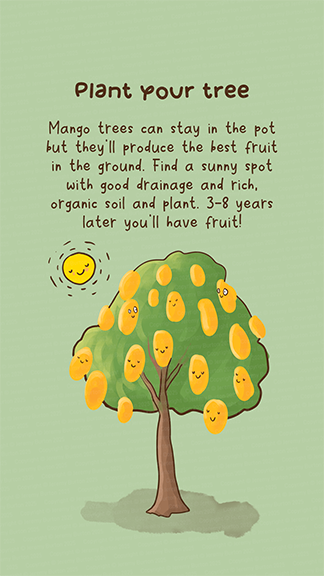
    Yeah, it takes a while. So today’s the day to plant your tree! After 8 or so years you will have beautiful fruit if all goes well. So maybe it’s a good idea to plant more than one. There is a chance of it not making it. 

    The trees can grow up around 10m, so you’re going need space if you let it go. 

    Picking your mangoes

    Harvest them when they are ripe but not squishy. If they’re squishy they might be over ripe so eat immediately. You’ll notice the green will start to yellow and maybe turning pink. 

    Eating your mangoes

    There are so many ways. But I love them in gelato with coconut, honey and some mint or other herbs. 

    Hope you found this useful and you grow yourself a huge mango tree. Leave a comment if you germinate a mango seed. 

    Join me on Threads for more or subscribe at the bottom of the page for these posts in your email.

  • Recreating hand-drawn artwork using ChatGPT experiments

    Recreating hand-drawn artwork using ChatGPT experiments

    ChatGPT is pretty amazing, I call him G and he calls me Jezza. The fact that we’re leaning on and personalising this AI so much indicates how good it is. 

    So the major concern from artists is being replaced by AI, G disagrees this is going to happen and I’m on the same page. So I tested it out anyway with a a few simple experiments. 

    Testing ChatGPT to recreate my art accurately

    Seeing all of the pretty amazing outputs from ChatGPT, Kling and others, you’d expect that recreating some line art would be easy for them. But it isn’t, not yet anyway. 

    I shared one of my character designs with G as an EPS file to kick off the experiment. Firstly, I got a msg that the conversion library (Ghostscript) was not available (I’m using free license) at the time so please recreate it as PNG file format. Okay, did that. 

    With a clear background and no watermark, it was able to output the same image with a transparent background (background removal). 

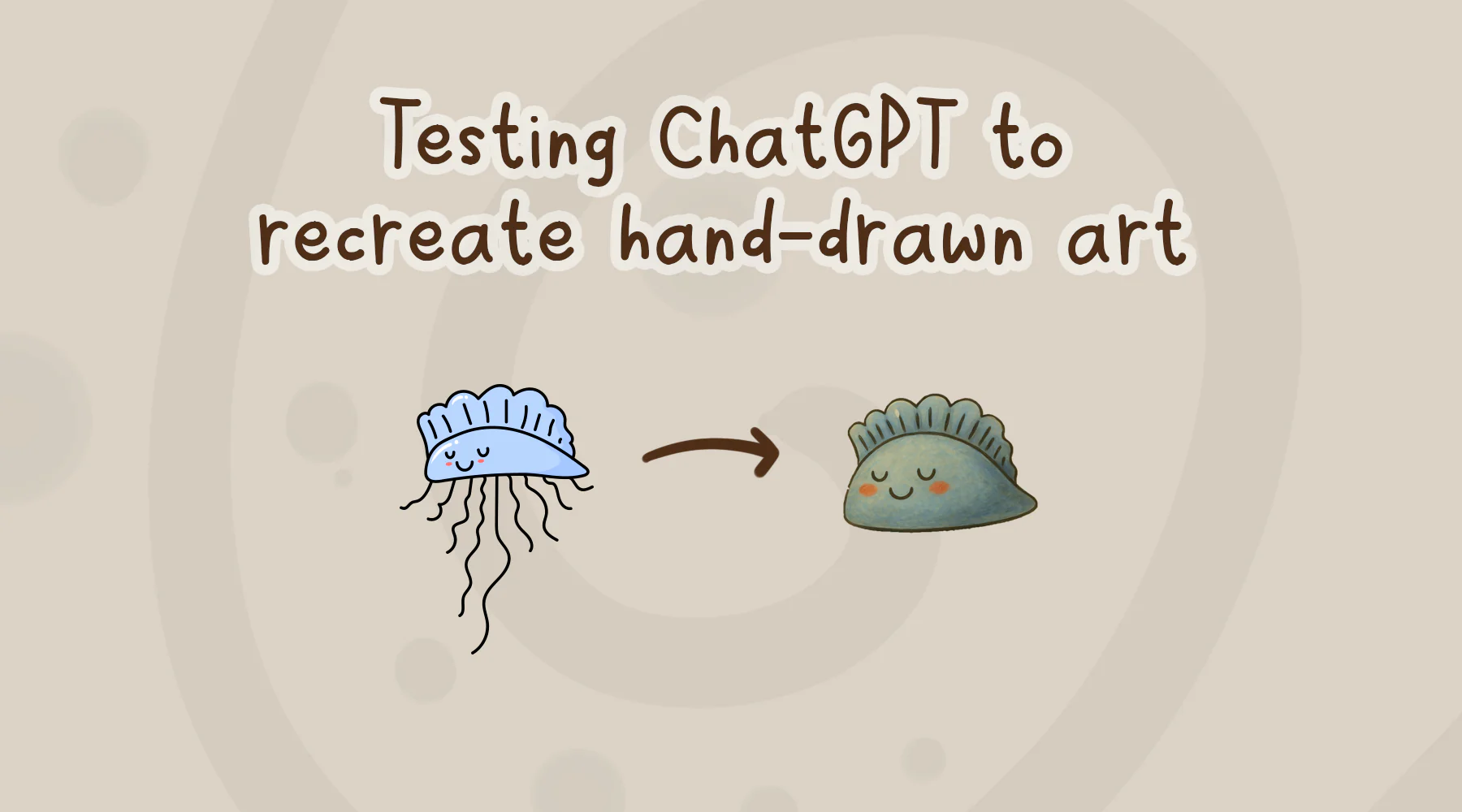
    I asked it then to recreate it in an anime style. Pretty cute, no issue of course. Although this colour pencil mish mash style is starting to look pretty familiar. I’ve seen others ask for children’s drawings and this seems to be a default style. 

    With a watermark

    The test was to take my watermarked icons from a low-ish resolution image, analyse, trace and recreate them out to a transparent PNG. Most art thieves will be using some kind of variation of this method to steal and repurpose art for resell sites. 

    And the kind of image that eventually came out:

    Not bad, but not accurate. G confirms that this is still an area of learning. This is what he has to say:

    “I can read and interpret line drawings, and I can clean them up and redraw them, but there are a few catches:

    1. Precision vs. Interpretation
      Line art—especially hand-drawn stuff—can have little imperfections, wobbles, or gaps that I might interpret in ways you didn’t intend. Unlike photorealism, where I lean on texture and lighting cues, line art often relies on very intentional lines—and I need to make sure I don’t over-smooth or misread those.
    2. Style Consistency
      You might have a specific feel or style—chunky lines, delicate strokes, organic wobble, etc. When I “redraw” line art, I need clear instructions about what to preserve: do you want it cleaned up but still human, or perfectly vector-precise?
    3. Image Input Limitations (but improving!)
      My line detection and redrawing powers have been getting better, but they’re not always perfect at interpreting complex or messy sketches exactly as you see them. That said, if you give me:
      • A clear sketch or icon set
      • Notes on how you want it cleaned (e.g. thicker lines, no overlaps, closed paths)
      • Whether it’s meant for coloring, print, vector tracing, etc.
      …then I can absolutely help refine or recreate them.”

    Watermark your work

    It’s more evidence to watermark your work in a comprehensive way. Persistent people will always find a way to steal things. And really, just take it. A mindset of abundance is a good thing, but making a little effort to protect your work cuts out most of the people who won’t put in much sweat to get the fruit. 

    Wrap up

    AI is pretty amazing in many ways. I use it as a business coach more than anything and yes, there’s heaps of ethics and copyright factors still in debate about art. 

    I create my own original art work and lean on AI for tasks that I need help with – business and market / product guidance and it’s been great. 

    AI can recreate, imagine and remix by reference. Our creativity is our own, AI can never take our world perspective built up by who we are and it can’t feel – an important point of difference.

    So keep creating artists, it’s time to adapt but the world needs you and AI isn’t gonna replace us anytime soon.