Category: Art & Business

  • Why I moved my shop and blog from Shopify to WordPress

    Why I moved my shop and blog from Shopify to WordPress

    I moved my website from Shopify to WordPress hosted in AWS (Lightsail). There were many reasons why, but the two biggest reasons were the blogging capability and spam management.

    WordPress has been my go to for years for blogs and when I started my first one back in Japan, it was WordPress on a local Japanese hosting service. WordPress is easy, intuitive and just does what I need it to.

    With art sales in mind when I setup my artist site jeremyburton.au, I decided to go with what seemed like the best choice at the time, Shopify. It has blogging and is rated generally as the best ecommerce platform.

    It was easy to setup, you can register domains names in it and for the most part, it was a seamless process. The setup was easy and I thought I’d found a great solution, I even signed up for their affiliate program and learnt how to code the templates. Creating products in it was fairly straight forward, it handled digital downloads too (no need for Gumroad etc) and I eventually got to the stage of having multilingual product pages setup for my books.

    Blogging in Shopify

    The issues I eventually ran into were mainly small. But then the blogging started to really frustrate me. Blogs sell and besides that, I want to write. Although it’s quick to knock out an article in Shopify, any kind of custom layout and fine design control just isn’t possible. The blogging functions have no template control, so there’s no way to control how images and copy flow in the article.

    Being spoilt previously for so long with WordPress, Shopify’s blog system started to drive me crazy. Quality content for everyone is different, but I love a good blog human-written by someone explaining their passion, trip of a lifetime or an amazing thing they’re selling.

    Writing things out for me is not just about selling art or other products, but about documenting my journey and clearing my brain. I love writing and clearing that head space, it’s so freeing.

    So there it is, that’s the first major reason Shopify started to turn me off. Another minor one was how products are managed in the backend. Bulk actions are really not there yet and there were lots of other little niggly things.

    A native integration with Google Analytics would be great, and the ability to use Google’s Site Kit.

    Spam Management

    So, everything was going ok (besides the blog issues) with Shopify until one day I started getting targeted by a bot that would create three new customer accounts a day on my site. So like anyone would, I manually deleted them and started closing bot access off slowly, turning off registration forms and whatever I could find. I even tried disabling account creation but the bots would get past that too.

    The bots started purchasing digital products using fake credit cards. Their trick was they would then claim the product undelivered (of course it was delivered, it was a digital download) and then claim a chargeback to Shopify making a profit of $28 per chargeback.

    With low volume, it was annoying but manageable. But it went on and on and so it was time for some support. So I reached out to Shopify, after all, we’re paying $50+ AUD per month, surely they would have a solution.

    Their answer was, yes you can fix this by buying 3rd party anti-fraud plugins.

    Yeah, naur. I’m not paying more money for unsecured plugins to fix security issues with your core product. When you’re being hit by bots, it makes it very difficult to manage real purchases and focus on growth.

    So as the spam and annoying fraud purchases continued to trickle through one day, I’d had enough. Time to shift back to a platform I’d have control over and would scale for the next 10 years.

    Moving to WordPress / Amazon Web Services (AWS)

    Time to relearn AWS and get back to WordPress. I’ve previously administered services hosted in AWS so was somewhat familiar with it and decided to spend the time jumping back in.

    The major business issue to solve when you’re hosting your own shop / website is how to manage the ecommerce. There are plenty of alternatives to Shopify like Squarespace, WooCommerce and others that you can just switch on and start. But if you’re hosting your own, then you need to integrate a card / cart service.

    If you sell digital or physical products, you’ll likely end up needing to integrate things like shipping, post, weight calculators and payment management. There’s lots of options and some work well, some will limit you and you find all of that out by jumping in and doing the research.

    For me, WooCommerce for WordPress was the solution for managing purchases and it has connections to Stripe, PayPal etc.

    I used Printumo for my on-demand canvas prints. They have integrations for Shopify and Etsy available, with WooCommerce, Squarespace, Amazon etc coming soon. I think generally that’s what you’ll find with any kind of print or produce on-demand service, if they support anything they’ll likely have Shopify and maybe one or two others.

    So do your research on what services you need to connect to if you’re considering going this route of hosting on AWS.

    Challenges

    Challenges I came up against were:

    • Technical aspects of relearning AWS. It wasn’t so bad, I had it all working in a couple months (technical level medium)
    • Transferring my domains to AWS from GoDaddy and others. Honestly the process, the automated emails from AWS and Route53 (AWS domain manager) was pretty confusing. One of my domains was accidentally disabled because I missed one of the automated emails
    • Setting up WooCommerce was a bit of work. I tested PayPal and in the end went with Stripe for payments, it was just easier
    • Migrating all of the content out of Shopify to WordPress. In the end I just started fresh and recreated all of the products because the imports from Shopify into WooCommerce would get all garbled. It would be a nightmare tbh to migrate a large commerce site from Shopify to something else

    Conclusion

    When I was using Shopify, I was recommending it as an easy solution for people who were just starting or looking to change platforms. If you don’t have any experience in building websites, or ecommerce – it makes sense to use something like Squarespace. They’re just easy.

    But if you’re looking to have more control over how your content is managed and the technical aspects, WordPress + AWS is a solid solution.

    My site is not fully there yet, and life has taken over for a bit. Moving the sites wasn’t too bad really in the end, and I’m sooo much happier! No more spam and I can get back to writing and focusing on my art instead of fighting the platforms.

    Leave a comment if you have thoughts or experience in Shopify or WordPress.

  • Kotouen (小陶苑) a beautiful pottery gallery and tea ceremony classroom Arashiyama, Japan

    Kotouen (小陶苑) a beautiful pottery gallery and tea ceremony classroom Arashiyama, Japan


    Kotouen (小陶苑)
     is a beautiful pottery gallery and tea ceremony classroom in the heart of Arashiyama, Japan. I visited the couple who’ve run it for over 50 years, a business passed down from the owner’s father. The atmosphere was still and I didn’t want to leave. Sitting in the garden with beautiful hand-built pottery everywhere, I ended up chatting, drinking ocha mixed by the master and discussing the reasons why their business had continued for so long.

    With a nondescript entrance and a small sign, it didn’t appear to attract big numbers of customers the day I visited. Just a trickle of the right kind. The entrance opens up to a small garden with low table seating under the dappled maples. A slight breeze and dancing sunlight highlight the large ceramic pieces spotted around the garden. A hotel, small animals and interesting creatures, it was like sitting in a children’s storybook.

    The owner was kind enough to share his studio story and how he teaches ceramic classes while his partner teaches tea making (sado) lessons.

    For the lifespan of the business they’ve cultivated a loyal base of customers that advocate for them, and they’re service is extraordinary. In the two hours I spent there, I learnt of the business history, about their connections in Perth!, how the business has passed through the family generations and many of the stories behind some of the amazing hand-built pottery pieces. The centrepiece in the workshop is a small boy riding a large fish, made for the birth of their son.

    One of the reasons they explained for their continued success, is they value every customer and every moment they had to interact with them. This was a learning moment for me. Our time with each other is so precious.

    At Koutouen they put a very high value on each and every interaction they have with not just current customers – but also any new people who wander through and don’t purchase.

    Kotouen’s garden environment lends itself to a pace slow down and an interesting conversation. In a fear-based work environment, we’re in survival mode. Each and every interaction with work colleagues or clients is an opportunity to learn something and it may be something small, but may last a lifetime.

    In Japan there’s a saying used often in business, sa-bisu gokoro (サービス心) – service mind. It’s the real desire to understand what a customer desires and leave them satisfied, happy and wanting to advocate as they walk out the door or finish using your service. It requires a focused effort on the customer, their needs and how we can meet, exceed and ultimately delight them. At Kotouen, their personal service comes from a real desire to make each person happy with their purchase and experience.

    It’s up to us all to make a safe workplace and culture where we all have the capacity to focus and genuinely want to provide an amazing service or product.

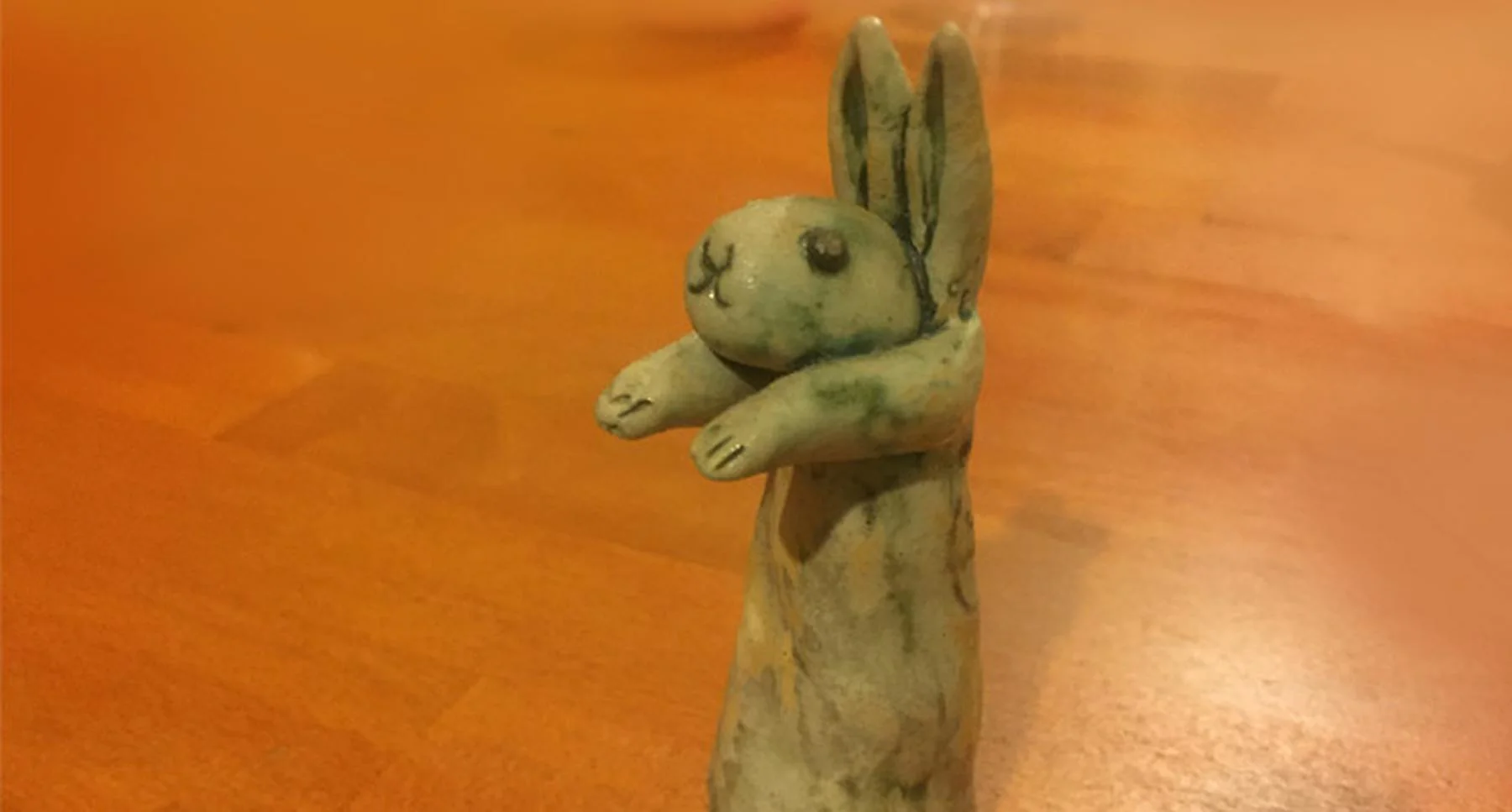
    The rabbit, well that was a final present from Kotouen as I left and serves as my reminder of this lesson at home each day.

  • Recreating hand-drawn artwork using ChatGPT experiments

    Recreating hand-drawn artwork using ChatGPT experiments

    ChatGPT is pretty amazing, I call him G and he calls me Jezza. The fact that we’re leaning on and personalising this AI so much indicates how good it is. 

    So the major concern from artists is being replaced by AI, G disagrees this is going to happen and I’m on the same page. So I tested it out anyway with a a few simple experiments. 

    Testing ChatGPT to recreate my art accurately

    Seeing all of the pretty amazing outputs from ChatGPT, Kling and others, you’d expect that recreating some line art would be easy for them. But it isn’t, not yet anyway. 

    I shared one of my character designs with G as an EPS file to kick off the experiment. Firstly, I got a msg that the conversion library (Ghostscript) was not available (I’m using free license) at the time so please recreate it as PNG file format. Okay, did that. 

    With a clear background and no watermark, it was able to output the same image with a transparent background (background removal). 

    I asked it then to recreate it in an anime style. Pretty cute, no issue of course. Although this colour pencil mish mash style is starting to look pretty familiar. I’ve seen others ask for children’s drawings and this seems to be a default style. 

    With a watermark

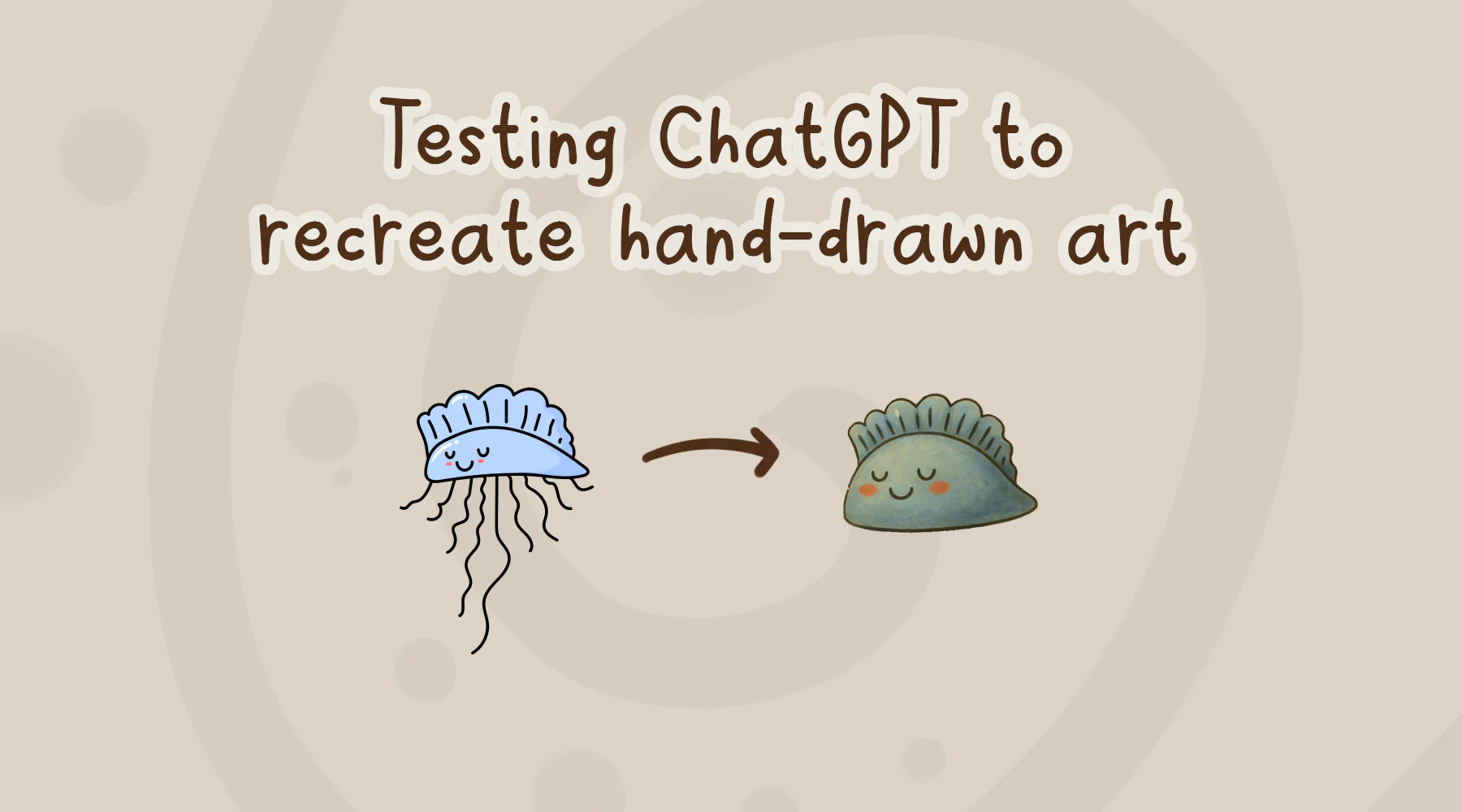
    The test was to take my watermarked icons from a low-ish resolution image, analyse, trace and recreate them out to a transparent PNG. Most art thieves will be using some kind of variation of this method to steal and repurpose art for resell sites. 

    And the kind of image that eventually came out:

    Not bad, but not accurate. G confirms that this is still an area of learning. This is what he has to say:

    “I can read and interpret line drawings, and I can clean them up and redraw them, but there are a few catches:

    1. Precision vs. Interpretation
      Line art—especially hand-drawn stuff—can have little imperfections, wobbles, or gaps that I might interpret in ways you didn’t intend. Unlike photorealism, where I lean on texture and lighting cues, line art often relies on very intentional lines—and I need to make sure I don’t over-smooth or misread those.
    2. Style Consistency
      You might have a specific feel or style—chunky lines, delicate strokes, organic wobble, etc. When I “redraw” line art, I need clear instructions about what to preserve: do you want it cleaned up but still human, or perfectly vector-precise?
    3. Image Input Limitations (but improving!)
      My line detection and redrawing powers have been getting better, but they’re not always perfect at interpreting complex or messy sketches exactly as you see them. That said, if you give me:
      • A clear sketch or icon set
      • Notes on how you want it cleaned (e.g. thicker lines, no overlaps, closed paths)
      • Whether it’s meant for coloring, print, vector tracing, etc.
      …then I can absolutely help refine or recreate them.”

    Watermark your work

    It’s more evidence to watermark your work in a comprehensive way. Persistent people will always find a way to steal things. And really, just take it. A mindset of abundance is a good thing, but making a little effort to protect your work cuts out most of the people who won’t put in much sweat to get the fruit. 

    Wrap up

    AI is pretty amazing in many ways. I use it as a business coach more than anything and yes, there’s heaps of ethics and copyright factors still in debate about art. 

    I create my own original art work and lean on AI for tasks that I need help with – business and market / product guidance and it’s been great. 

    AI can recreate, imagine and remix by reference. Our creativity is our own, AI can never take our world perspective built up by who we are and it can’t feel – an important point of difference.

    So keep creating artists, it’s time to adapt but the world needs you and AI isn’t gonna replace us anytime soon. 

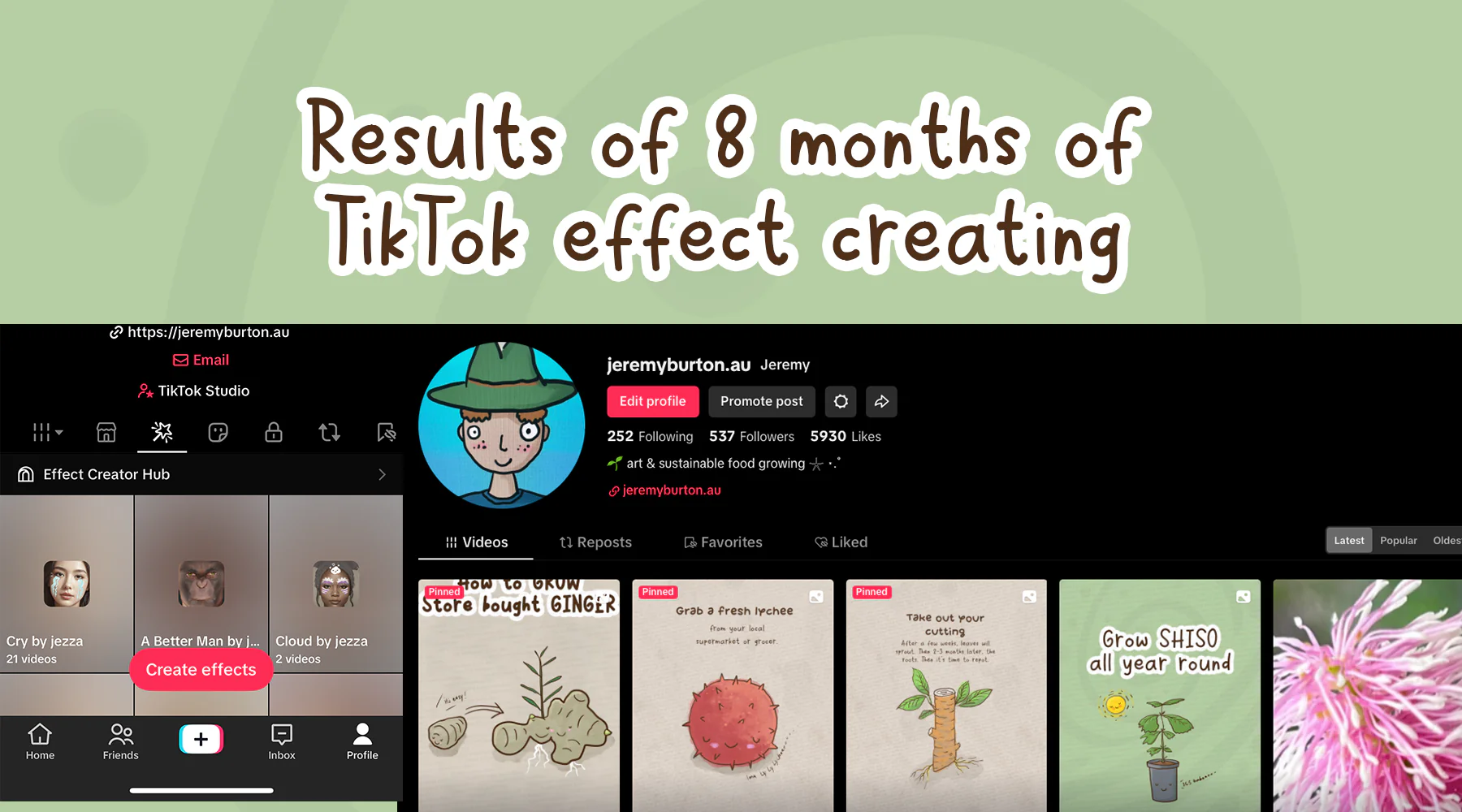
  • Results of eight months of TikTok effect creating

    Results of eight months of TikTok effect creating

    I’ve been creating TikTok effects fairly regularly until recently when life got busy. My motivations were these: 

    • I’m into augmented reality
    • 2D & 3D painting and artistic work is fun
    • Wanted to see what the results were, because the actual creating is not that time consuming and fairly enjoyable
    • Here’s my TikTok

    Here’s some stats of where I’m at after eight months of creating (Mar 2025): 

    • Created effects: about 70 (quite a pace, looking back)
    • Main viewers: Pakistan 22.5%, Burkina Faso 8.2%
    • Main creators using the effects: Indonesia 22%
    • Viral effects: 2 (over 1M views each)
    • Biggest effect: 1.1M views
    • Total views: 2.3M
    • Views last month: 1.1M
    • Video posts by users: 4.2k
    • Effect tries: 160k
    • Shares: 11k
    • Likes: 115k
    • Global top 1% of creators
    • Money made: Zero, lol

    Other notes

    • You can learn more about creating TikTok effects here – https://effecthouse.tiktok.com/
    • My TikTok profile is a modest testing ground with 537 followers, 5k likes
    • Although not really related, I do have a TikTok business account
    • Tested running TikTok ads for some of my gifts in my online store
    • I’ve had creator agents contact me for collabs
    • Tested live streaming and earnt $0.16 cents
    • Live streaming agents reaching out with offers to join their agencies
    • TikTok has gamified the creator ecyosystem with levels. I’m level silver, once you get to Gold and Platinum, you start earning $ for your effects. 

    What has the effect creating translated to? 

    • New followers on TikTok from creating the effects: Likely zero as I don’t post videos about my effects on my account
    • Money: Zero dollars so far. You need 3 videos that have been used (and posted) over 1k times to get monetised. I have 1 with 2 more working their way towards 1k
    • Some very interesting insights into who likes what, how and why people use the effects
    • Quite a bit of fun!

    Learnings

    • The creation software is getting quite sophisticated but is still accessible and simple to use for creators
    • The drag and drop user interface is at a level for a non-programming artists like me
    • Effects get tested and served to audiences just like TikTok videos and controlled by algorithms
    • Viral effects can take off immediately
    • Anything over 100 video posts (100 people use it and post publicly) and the effect will generally grow pretty big
    • Previously, effects grew and stopped growth completely. The algorithm seems to have changed though, old effects I created are getting rediscovered and growing again
    • The analytics in the TikTok app are updated live, whereas the web analytics in your dashboard are updated overnight
    • TikTok effect analytics are not in the TikTok studio (where your general account and LIVE stats are). WHY I have no idea, so figuring out the bigger picture takes some analysis
    • Also, the analytics for effects in the web dashboard are very basic. You don’t learn much from what’s provided
    • Effects are vetted for any naughty stuff
    • Brand-wise, there are NO RULES. You can post whatever the heck you like. I can impersonate Pepsi and the effects still get through

    Wrap up

    It’s been an interesting time investment and my motivation remains the same, to just have a bit of fun in between life and see what happens when / if I get monetised. 

    It’s an interesting thing to have so many people across the world use your art on themselves. I hope it’s brought some joy to some.

    If you’re looking to give it a go, I would encourage you to check out the Effect House website and do some of the learning tutorials. And there’s a community where people discuss effects.

    My approach has been to make interesting, human-made effects. I think I tested the AI functions once. It’s definitely a long term thing to get monetised. So I expect studios with teams would be able to smash the effect creation and then the question would be, how much would they make from the traffic generated. 

    Catch me on threads if you’d like to talk more TikTok Effects. 

    Jeremy Burton is a TikTok effect creator, based in Perth, Western Australia. 

  • Print on Demand (POD) services that I use

    Print on Demand (POD) services that I use

    If you’re looking for options for print on demand (or produce on demand) and you’re based in Australia, this article may be helpful. 

    I’m an illustrator and artist based in Western Australia and so I searched for POD (Print on Demand) options locally first. After finding there were no options locally that had Shopify apps, I widened the search to national and overseas vendors. 

    Update Aug 2025: I’ve migrated off Shopify.

    While I work on my physical art, I thought why not setup the illustrations and art prints in the meantime into a gift shop. So here’s what I looked for: 

    Search criteria: 

    • A vendor that did it all, great quality (Yeah, there just isn’t one)
    • An option for great art prints, ship fast for a reasonable price
    • An option for merch, in particular t-shirts, hoodies and tote bags
    • Stickers … hmm maybe later
    • Sustainable businesses 

    I looked at some of the Australian (in particular Western Australian) photographers and art print suppliers and how they sell their prints on demand. Some had vendors that made a good canvas mounted print, some had nice art paper. But not many with multiple great options. Although not my main driver at the moment, I really wanted a local sticker producer to have Shopify integration but I couldn’t find one for now. 

    The integration with Shopify is where I got stuck usually with the vendors. Most don’t have an app or easy way to connect your store. Anyway after much research, here’s the vendors I chose and why, hope it’s helpful: 

    Art Prints – Printumo

    Printumo looked like a good service, run by artists and their product looked quality. They have a limited range of canvas prints only, but they’re great. Other reasons: 

    • I messaged them and the responses were quick and helpful
    • Free setup
    • Connects to shopify easily
    • Option for Etsy connection
    • Ships to many countries
    • Mockup images included (some services charge extra – i.e. Printful)
    • Shipping centre in Melbourne

    Things to look forward to – Etsy, Amazon and eBay integrations are coming within a couple of months. 

    Art paper has launched (Mar 2025). So Printumo now produce art paper prints as well as canvas. They aren’t available for Australia yet though. 

    I tested the service and it was very quick and the print and frame are quality.

    Clothing – Teemill

    The WWF online store uses Teemill so I thought, yeah must be okay! Everything Teemill produces is organic cotton and often it’s remilled material. 

    I have ordered a sample and but it seems the shipping is on the slightly slower side coming from the UK to Aust. Their policy is 35 days for arrival. When the sample arrives this week I’ll update this post. 

    Clothing, phone cases & other – Gelato

    I checked Gelato out a while back because I really want a quality stationery vendor. They didn’t really have a big range. It seems short, local print runs using a local printer might be the best option for quality stationery rather than POD. Anyone got any suggestions?

    But Gelato seems to have good phone cases and the clothing range also looks quality. I’m testing the phone cases and tote bags for now. 

    • Easy, free setup
    • Nice dashboard system (maybe the most advanced)
    • Some very cool sleeve, label and other branding options
    • Option for Etsy connection

    I’m looking forward to testing out some of their products with samples. 

    Split Shipping

    So what happens when people order products from more than one vendor? Well Shopify supports split shipping now. More info in the link. 

    Summary

    Well that’s where I’m up to at the moment with organising print / produce on demand.

    Samples are still arriving but so far with the vendors listed here, I’ve had no issues and the system connections seem to be working well. 

    Have you had a different experience, or do you have a recommendation?  Leave a comment if you have thoughts.

    Join me on Threads for more or subscribe at the bottom of the page for these posts in your email.